

Whale Watching Tours in Alaska: Best Tours and Tips
Are you wanting to see whales up close on your trip to Alaska? Well, you’re in luck! Alaska is a great destination for whale-watching! In this guide, we’ll share the best places for whale watching in Alaska, the different whales you’ll find in Alaska, the best Alaska whale watching tours and tips.
Fit Two Travel contains affiliate links and is a member of the Amazon Services LLC Associates Program. If you make a purchase using one of these links, we may receive compensation at no extra cost to you. See our Privacy Policy for more information.
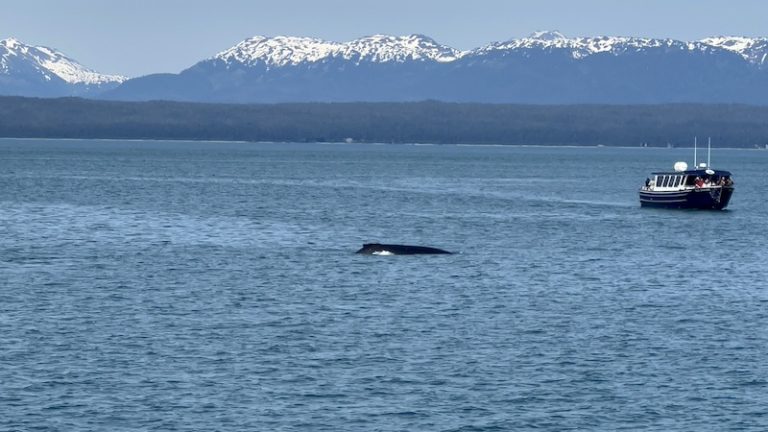
Visiting Alaska, is a bucket list trip for many. And so is seeing whales on a whale watching tour. You’ll be able to see the whales breaching and fin slapping, and you may even be able to hear them communicate with one another. Whale watching in Alaska is an unforgettable experience.
If you don’t have time to read the whole thing, here are our top whale-watching tours in Alaska:
Top 3 Alaska whale-watching tours:
Juneau: Juneau’s Premier Whale-Watching Tour
Icy Strait Point/Hoonah: Hoonah Whale-Watching Cruise
Seward: Kenai Fjords National Park 6-Hour Cruise
Why is Alaska a premier destination for whale watching?
Alaska is not just a great place to visit to see whales, but also lots of wildlife. Alaska has some of the best whale-watching in the world due to many reasons:
Rich Marine Environment
Nutrient-Rich Waters: The nutrient-rich waters of Alaska, particularly in regions like the Inside Passage and Prince William Sound, create an ideal feeding ground for whales. The nutrients support a diverse and abundant marine ecosystem, including krill and small fish, which are primary food sources for many whale species.
Glacial Activity: The calving glaciers in areas such as Glacier Bay and Tracy Arm provide unique opportunities to see whales in dramatic settings. The cold, nutrient-laden waters from glacial runoff further enrich the marine environment.
Whale Migration Routes
Migration Pathways: Alaska lies along the migratory routes of several whale species, including humpback whales, gray whales, and blue whales. These whales migrate from their breeding grounds in warmer waters to feed in the nutrient-dense Alaskan waters during the summer months.
Feeding and Breeding Habitats: Alaska offers both feeding and breeding habitats for different whale species. For example, humpback whales travel to Alaska to feed on herring, krill, and other small fish during the summer, providing ample viewing opportunities.
Varied Whale Species
Diverse Whale Populations: Alaska is home to a variety of whale species, including humpback whales, orcas (killer whales), gray whales, minke whales, and blue whales. This diversity increases the chances of sightings and makes the experience more rewarding for whale watchers.
Orca Pods: Alaska’s coastal waters are particularly famous for orca sightings. Resident pods are commonly seen around the Kenai Fjords and the Inside Passage, offering unique viewing experiences.
Accessibility and Infrastructure
Well-Developed Tourism Industry: Alaska has a well-developed tourism infrastructure that includes specialized whale watching tours, knowledgeable guides, and a variety of boat options. This makes it easier for visitors to have a successful and informative whale watching experience.
Protected Areas: Many of Alaska’s whale watching spots are within protected areas, such as national parks and marine sanctuaries. These protections help ensure the health and stability of whale populations, contributing to consistent sightings.
Scenic Backdrop
Stunning Landscapes: The combination of Alaska’s dramatic landscapes—glaciers, fjords, and rugged coastlines—adds to the whale watching experience. Seeing whales against the backdrop of Alaska’s breathtaking scenery enhances the overall experience.
Seasonal Opportunities
Summer Peak Season: The peak whale watching season in Alaska is during the summer months, from May to September, which coincides with the best weather conditions and the peak of whale activity, making it an ideal time for visitors.
As you can see, there are a lot of factors that combine to make Alaska a premier destination for whale watching, offering both high chances of sightings and a truly remarkable natural setting.
Types of Whales to Expect in Alaska
Whale watching in Alaska is great because of the variety of whales that are in Alaska. Here are the main types of whales you can expect to see in Alaska:
- Humpback Whales
- Humpback whales are known for their acrobatic displays, including breaching and slapping their fins on the water. They have distinctive long pectoral fins and a knobby head.
- You can find humpbacks in Alaska in the summer (May-September)
- Orcas (Killer Whales)
- Orcas, or killer whales, are easily recognizable by their black and white coloring and tall dorsal fin. They are highly social and live in pods.
- Resident orcas can be seen year-round, while transient orcas are more commonly seen in the summer.
- Grey Whales
- Gray whales are known for their gray, mottled appearance and the lack of a dorsal fin. Instead, they have a series of bumps along their back
- Gray whales are typically seen during their migration from Mexico to the Arctic in the spring and fall.
Best Places for Whale Watching in Alaska
Juneau Alaska Whale Watching
Juneau and the nearby fjords are popular whale watching spots. Juneau is a feeding area for humpback whales, due to the nutrient rich waters in Favorite Channel and Saginaw Channel. These waterways attract the whales all summer long. Most whale watching tours in Juneau have a 100% guarantee of seeing whales, due to the abundance of whales in the summer.
Some of the most popular whale watching tour operators in Juneau are:
A plus to doing a whale watching tour in Juneau is there is also tons of wildlife around and the plenty of glaciers to see as well.
Icy Strait Point Whale Watching
Icy Strait Point is a privately owned tourist destination on Chichagof Island, just outside the small village of Hoonah, Alaska. Icy Strait Point is a smaller, more intimate cruise port. Between Icy Strait Point and Hoonah, whale watching is very popular. You don’t even have to do a tour here, as you can most likely spot the whales from the beach. But one of the best things to do in Icy Strait Point is a whale watching tour.
Not only is Icy Strait Point a popular whale-watching spot, there’s also a lot of other wildlife in this area, including bears, harbor seals, sea lions, porpoises, and even bald eagles. Doing a whale watching tour in Icy Strait Point provides more privacy, as this area is more remote and has less boats.
We did our whale watching tour with Icy Strait Whale Adventures and had a great time! The staff was super friendly and we got to see lots of whales and other wildlife!

Some other popular whale watching tours in Icy Strait Point
Seward Alaska Whale Watching
One of the most reliable places for whale watching in Alaska, is a 970 foot deep fjord extending south toward the Gulf of Alaska and the Kenai Fjords National Park. Seward is the launch point for most tours that are going to Kenai Fjords National Park or Resurrection Bay. The best times of year for whale sightings in Seward is between May and September when you’ll most likely see humpbacks and orcas.
Popular Whale watching tours in Seward, Alaska:
Alaska Whale Watching Tips
Some tips for you when you go on a whale watching tour in Alaska
- If you are prone to getting seasick, it’s best to pick a bigger boat. We also recommend packing some dramamine in order to keep the seasickness at bay.
- If you aren’t prone to getting seasick, the smaller the boat the better, as they’ll be able to sneak into more bays and chambers for better whale watching.
- Never feed the whales or other marine life
- Never interact with wildlife
Best time to go Whale Watching in Alaska
Although you can see orcas all year round in Alaska, as they live and hunt in the bays and inlets, the summer months are the best times to see whales in Alaska. Typically in April, you’ll start to see gray whales arriving. Orcas arrive around May, and then in June the humpbacks arrive. Peak whale season in Alaska is typically May-September.
What to pack for Whale Watching Tour
- Camera – Make sure to have a great camera for all your wilderness opportunities. Make sure to have your camera out and ready! You never know when the whales will breach
- Binoculars – bring a binocular so you can see all the wildlife
- Weather-appropriate clothing – chances are you’ll be visiting Alaska in the summer, but you still never know what the weather will be doing. It’s important to bring layers and a rain jacket, just in case
- Hat – pack either a baseball cap or a beanie. It could be cold and wet or sunny, so you’ll want to be prepared
- Refillable Water bottle – We take a refillable water bottle with us everywhere, so we’re always hydrated
- Snacks – some tours may have some snacks, but we always recommend bringing a few pre-packaged snacks, like trail mix or jerky sticks
- Waterproof boots – it’s best to bring waterproof shoes or boots, as the chances are high that you’ll get your feet wet. Either way, you want shoes that have good traction for when you are getting in and out of the boat.
Alaska Whale Watching Recap
If you are looking for an awesome place for whales and other wildlife, Alaska is the destination. With its scenic backdrop, nutrient-dense waters, and the migration routes of the whales, you really can’t miss whale watching in Alaska. We had so much fun when we went, and we would do it again and again each time we go back.
If you’re planning to visit Alaska, check out these posts:
